Amazon AWS Cloud Computing and Development Services

AWS Development Company for Cloud Applications, Migration and API Delivery

Most teams do not need more cloud jargon. They need a delivery partner that can look at the current product, the release pressure, the operating model and the future roadmap, then choose an AWS path that is actually maintainable. That is the difference between generic cloud talk and useful AWS development services.

Onex Software works with teams that need more than a diagram. Some are launching a new SaaS platform and want a clean AWS-native foundation. Some are carrying a legacy application that still works but has become slow to change, expensive to maintain or risky to deploy. Others are stuck in the middle: new features are arriving, integrations are multiplying and the existing API layer is no longer a good boundary between products, partners and internal systems.

In each of those cases, the right answer is rarely “move everything” or “make everything serverless.” A better answer is usually more practical: decide what should be managed, what should stay simple, what should be isolated, what should be observable and what should be deferred until it creates real value. If that is the kind of AWS cloud development work you are looking for, contact Onex Software or start your project.

👉 Get a Quote!

We use technologies like AWS Lambda, EC2, S3, and DevOps tools to deliver scalable cloud solutions. The best aws development services are not a menu of isolated tasks. They are a delivery system. They connect discovery, architecture, implementation, release engineering and production feedback into one consistent workflow. When teams skip that connection, they often end up with a technically functional system that still feels fragile in daily use.

The phrase aws development company gets used loosely. In practice, a credible partner should not just “know AWS.” They should be able to shape cloud decisions around product behavior, release discipline, data flow, integration points and operational ownership. That means asking better questions before writing infrastructure code: What changes most often? What fails most often? What must stay available? Which teams will maintain the system six months after go-live? Which service boundaries are real and which ones are still assumptions?

A useful AWS software development company also knows when not to over-design. It is easy to turn a straightforward product into a maze of Lambdas, queues, edge functions and background triggers that looks modern but becomes hard to reason about. The stronger approach is to keep architecture proportional to the workload. If the product is still evolving rapidly, simple boundaries and reliable deployment pipelines often matter more than a fully “maximized” cloud design.

That is why good Amazon Web Services development work usually includes five things at the same time: architecture choices that support the product, delivery workflows that reduce release friction, API boundaries that stay coherent as features expand, security and observability built in early, and a migration path that accepts the reality of existing systems. Without that combination, cloud projects often look promising at the start and become operational debt later.

For founders and product owners, the practical question is not “Which AWS service is popular?” It is “Which setup lets our team ship, observe, secure and extend this product without turning every release into a coordination problem?” That is the lens we recommend using from day one.

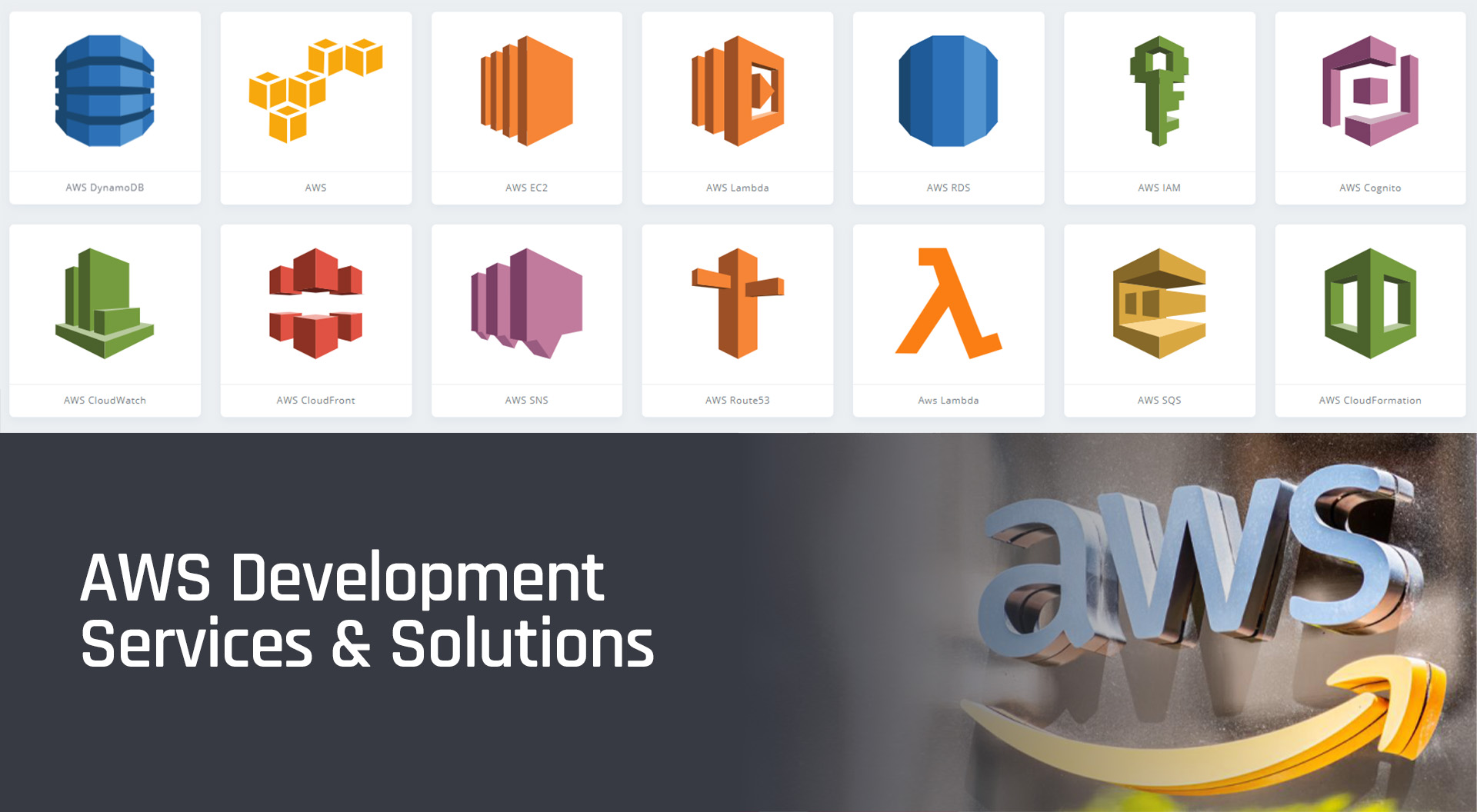
AWS Development Services & Solutions

Teams usually look for an AWS partner at one of three moments. The first is growth pressure: the product is finding traction, but the current setup was built for speed, not durability. The second is migration pressure: the existing stack still works, but every change is too risky, too slow or too expensive to keep scaling. The third is integration pressure: more clients, more channels, more back-office dependencies and no clean API layer to hold them together.

In all three situations, the real problem is not just infrastructure. It is technical decision quality. More tools rarely fix that. More dashboards do not simplify a tangled release process. More services do not automatically improve architecture boundaries. What helps is a structured AWS cloud consulting and delivery approach that links product intent to engineering decisions.

A serious AWS product engineering partner should be able to tell you where complexity is justified and where it is not. For example, if you are still validating a product model, the priority may be fast iteration, simple managed services and disciplined deployment. If you are already supporting multiple clients and external integrations, the priority may shift toward stronger environment control, API governance, network boundaries and production observability. Both are “cloud” projects, but they require very different decisions.

That is also why we usually recommend starting with a focused technical baseline instead of a broad wish list. Clarify the product shape, the risk points and the ownership model first. Then build the cloud plan around those realities. It creates better software and fewer regrets.

  • Can they explain trade-offs in plain language instead of only naming services?
  • Do they define rollback, observability and ownership before go-live?
  • Can they modernize gradually instead of insisting on a full rebuild?
  • Do they separate gateway, app logic and data responsibilities clearly?
  • Can they describe how release cadence and cloud architecture affect each other?
  • Do they offer a realistic first phase instead of an oversized transformation plan?

Ready to innovate? Let's get in touch

We do not Outsource, Our Quality is Always at the Same Level – No Bad Surprises for You. Craft simple, agile and reliable cloud solutions with Onex Software’s highly-functional AWS web services. Leverage bespoke, world-class design infrastructure for enterprises of all scopes and sizes. It has survived not only five centuries, but also the leap into electronic typesetting, remaining essentially unchanged.

AWS Development
  • AWS Cloud Services Expertise
  • Uncompromised Quality Checks
  • AWS Cloud Solutions
  • AWS Migration
  • AWS Consultation
  • AWS Managed Services
AWS Web Development
AWS App Development

Many cloud service pages sound similar because they stay at the level of promise: scalable, secure, modern, resilient, future-ready. Those words are not wrong, but they are not enough to help a buyer evaluate fit. A stronger service page should help teams understand how decisions get made, where projects go wrong, what trade-offs are normal and how an AWS development partner thinks under real delivery pressure.

That is why this page focuses on migration sequencing, API boundary design, service selection discipline, rollback thinking, observability and operating simplicity. These are the areas where product teams feel cloud quality most clearly. They are also the areas that generic sales pages often leave vague.

If your team is assessing AWS vendors, this is a useful internal filter: choose the one that can explain complexity in the language of product risk, engineering ownership and release confidence. Cloud is not just about where software runs. It is about how confidently your team can keep improving it.

To continue the conversation with a real project context, visit our contact page or send a project brief.

Frequently Asked Questions

What does an AWS development company usually handle?

A capable AWS development company usually handles architecture review, cloud application design, migration planning, API strategy, infrastructure automation, environment setup, monitoring and post-launch improvements. The stronger partners connect those tasks into one delivery model instead of treating them as isolated technical items.

Do all projects on AWS need a serverless architecture?

No. Serverless is often a strong choice for event-driven workloads, variable traffic or teams that want less infrastructure overhead, but some products are easier to operate with containers and more explicit runtime control. The correct choice depends on the workload, not the trend.

How do you approach AWS migration without disrupting daily operations?

The safer approach is phased migration. Teams map dependencies, choose a low-risk first slice, define rollback paths and move selected technical boundaries in sequence. That reduces operational stress and helps the organization learn from each stage before moving deeper into the system.

Where does AWS API Gateway make the biggest difference?

It makes the biggest difference when several clients or partners need consistent access to backend services. Routing, authentication, throttling, request validation, versioning and visibility become easier to manage when the gateway is used as a clear policy boundary rather than a place for business logic.

Can an existing product be modernized on AWS without a full rebuild?

Yes. Many products benefit more from staged modernization than from a complete replacement. A team can improve deployments, isolate unstable modules, move storage or asset delivery, introduce better monitoring and strengthen API boundaries before deciding whether deeper refactoring is necessary.

How do you choose between containers and serverless on AWS?

The decision usually depends on execution patterns, dependency requirements, traffic variability, latency expectations, team familiarity and the level of operational control the system needs. Good architecture choices are made in context, not by default.

What should be ready before starting AWS cloud development?

A productive start usually requires clear product goals, a rough integration map, data boundaries, environment expectations, access control needs, delivery priorities and known operational risks. Perfect documentation is not required, but vague ownership slows cloud work immediately.

Do AWS development services include DevOps and cost awareness?

They should. Useful AWS development services include infrastructure as code, automated deployment, baseline monitoring, log strategy, environment discipline and cost-aware design choices. Otherwise the system may launch successfully but remain hard to operate responsibly.

Is AWS suitable for both startups and established companies?

Yes, but the architecture should reflect the stage of the business. Startups often need faster iteration and simple cloud boundaries, while established organizations usually need stronger governance, phased modernization and cleaner integration with existing systems.

How do I start a project with Onex Software?

You can reach out through the contact page or use the project intake page. Sharing your current stack, goals, constraints and timeline early helps turn the first discussion into a practical technical direction much faster.

Every project is unique, and we may require different things from you, however, traditionally, the list is as follows:

  • Project goals, vision, and roadmap if exist.
  • High-level project requirements.
  • Project-specific documentation if available, for example, software architecture and mockups.
  • Client’s availability - a couple of hours per week for requirements gathering sessions.
  • Project deadlines.
gif dosyası
  • AI/ML
  • Computer Vision
  • Blockchain
  • Embedded Software
  • IoT
  • Automation and Robotics
  • Content Distribution
  • AR/VR/MR
  • AI/ML

    Solutions delivering analytics, product recommendations, cognitive computing, and predictive analytics.

  • Computer Vision

    Solutions for object, movement, pattern recognition, object tracking, video content analysis.

  • Blockchain

    Solutions for securing verifiable transactions, maintaining and tracking transactional data, analyzing transaction flow and wealth distribution.

  • Embedded Software

    Creating software for machines and devices - wearable gadgets, appliances, industrial machines, etc.

  • IoT

    Consumer gadgets, smart home healthcare solutions, computer numerical controls, DSP and network solutions.

  • Automation and Robotics

    Solutions for remote process control, equipment monitoring, production line automation; electronics driven by firmware, MCUs, sensors, and algorithms.

  • Content Distribution

    Smart TV solutions, video capturing and processing software, media content distribution systems, instant messengers with video sharing features, and interactive video conferencing solutions.

  • AR/VR/MR

    Business and game apps facilitating knowledge-sharing, employee onboarding, field service management, and immersification.

  • Tech Engagement

  • Software Innovation

arka plan